Stress is part of every Indian crop season
Indian crops rarely grow in ideal conditions. Pre-monsoon heat, breaks in the monsoon, late-season terminal heat in wheat, saline groundwater and transplanting all put plants under pressure. These are abiotic stresses – caused by non-living factors rather than pests or diseases.
Abiotic stress often reduces yield without obvious warning signs. A crop that loses a few days of growth during a heat spell, or takes a week longer to recover after transplanting, may look fine but give a lower harvest. Helping the plant tolerate and recover from stress is one of the main roles of biostimulants.
Common abiotic stresses in Indian farming
| Stress | When it commonly occurs | Typical effect on crops |
|---|---|---|
| Heat | Pre-monsoon summer, late rabi (terminal heat in wheat) | Flower and fruit drop, poor pollination, shrivelled grain |
| Drought / moisture stress | Delayed or broken monsoon, rainfed areas | Wilting, reduced growth, poor grain and fruit filling |
| Transplant shock | Paddy and vegetable transplanting | Slow establishment, yellowing, delayed growth |
| Herbicide shock | After herbicide use in nurseries or fields | Temporary yellowing, stunting, growth check |
| Salinity | Saline soils and saline irrigation water in parts of north-west and western India and coastal areas | Reduced water uptake, leaf burn, lower yield |
How plants respond to stress
Plants have their own defence systems. Understanding them helps explain how biostimulants work.
Oxidative stress and antioxidants
Under heat, drought, salinity and other stresses, plant cells produce excess reactive oxygen species (ROS). In small amounts these act as signals, but in excess they damage cell membranes, proteins and chlorophyll. Plants counter ROS with antioxidants – enzymes and compounds that neutralise them. A plant with stronger antioxidant activity is better able to protect its cells and keep photosynthesis going under stress.
Osmoregulation
When soil water is scarce or salty, the plant struggles to draw in water. Plants respond by adjusting the concentration of solutes in their cells – osmoregulation – so they can keep pulling in water and keep cells turgid. Potassium plays a central role here, along with natural compounds the plant builds up under stress. Potassium also helps control the opening and closing of stomata, which affects water loss.
Photosynthesis and energy
Stress usually reduces photosynthesis. With less energy available, the plant slows growth, drops flowers or fruit, and fills grain poorly. Supporting photosynthesis and nutrient uptake helps the plant keep growing and recover faster.
How biostimulants support stress tolerance
Biostimulants do not stop heat or drought, and they do not replace irrigation or good management. What they can do is help the plant's own defences work better. Common modes of action include:
- Raising antioxidant activity to limit cell damage from ROS
- Supporting photosynthesis so the plant has energy to keep growing
- Improving nutrient uptake when roots are under pressure
- Supporting osmoregulation, especially through potassium nutrition
- Activating natural defence and signalling pathways in the plant
Verdesian products for stress management
Crop+™ – antioxidant and defence support
Crop+™ is produced by multi-stage fermentation using naturally occurring microorganisms. It combines metabolites, selected marine algal extracts and protein hydrolysates with naturally chelated nutrients. Its stated benefits include high antioxidant activity, enhanced natural defence (elicitation), increased photosynthesis, support of secondary metabolic pathways and genetic upregulation.
Dose: 250 ml per acre, or 1.5–2 ml per litre of water.
Nursery+™ – protecting seedlings from early stress
Nursery seedlings are among the most stress-sensitive plants on the farm. Nursery+™ supplies essential nutrients and:
- Minimises transplant shock
- Protects nursery crops from herbicide shock
- Helps plants overcome abiotic stress such as high temperature and drought
- Increases photosynthesis and antioxidants for a healthier crop in the main field
Dose: 2.5–5 ml per kg of water-soluble fertilizer.
Cyto Potash – osmoregulation for drought tolerance
Cyto Potash is a blend of organic compounds and potash in liquid form for easy application and rapid absorption. It acts as an osmoregulator, improving abiotic stress tolerance – especially drought – through the season. It also supports grain and fruit size, weight and colour formation.
Dose: 250 ml per acre, or 1.5–2 ml per litre of water – at grain filling in field crops and at colour change in fruits and vegetables.
primacyALPHA® – keeping growth and fruiting on track
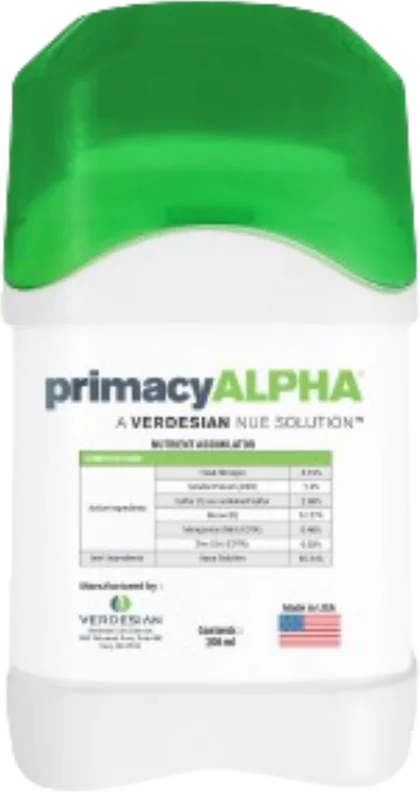
primacyALPHA® works inside the plant to stimulate efficient assimilation and use of nutrients. A blend of a cytokinin precursor, a chlorophyll precursor and Take Off technology, it promotes plant health and stress tolerance and supports flowering, fruit size and fruit set – the stages where stress often costs the most yield.
Dose: 400 ml per acre, or 2.5–3 ml per litre of water.
A note on salinity
Salinity is a long-term soil and water problem. Biostimulants that support antioxidant activity and nutrient uptake can help the plant cope with general abiotic stress, but saline soils need proper management: testing soil and irrigation water, good drainage, choosing tolerant varieties and reclamation where recommended. Ask an agronomist before relying on any input for saline conditions.
Practical tips for stress-prone seasons
- Apply before or early in stress. Support works best when the plant's defences are still strong.
- Protect the nursery. Stress at the seedling stage carries through to the main field.
- Keep potassium adequate going into grain filling and fruit colouring.
- Irrigate wisely. Light, timely irrigation during heat spells helps more than any input alone.
- Follow label doses and check compatibility before tank-mixing.
Talk to a Verdesian agronomist
Facing heat, drought or transplant stress this season? Contact a Verdesian agronomist for a stress management plan, or request our trial reports.
Frequently asked questions
What is abiotic stress in crops?
Abiotic stress is damage or growth loss caused by non-living factors such as high temperature, drought, waterlogging, salinity, cold or chemical injury from herbicides – as opposed to pests and diseases.
How do biostimulants help crops under stress?
Biostimulants support the plant's own defences – for example by raising antioxidant activity, improving nutrient uptake and supporting photosynthesis – so the crop is better able to tolerate stress and recover.
Which Verdesian product helps reduce transplant shock?
Nursery+ is formulated for nurseries. It helps minimise transplant shock, protects nursery crops from herbicide shock and helps plants overcome high temperature and drought.
How does Cyto Potash help in drought?
Cyto Potash acts as an osmoregulator, improving abiotic stress tolerance – especially drought – through the season.