Why the nursery decides the crop
For transplanted crops – paddy, chilli, tomato, brinjal, cabbage, cauliflower, onion and many others – the main field crop is only as good as the seedlings that go into it. Weak, overgrown or stressed seedlings take longer to establish, suffer more transplant shock, and often give an uneven crop.
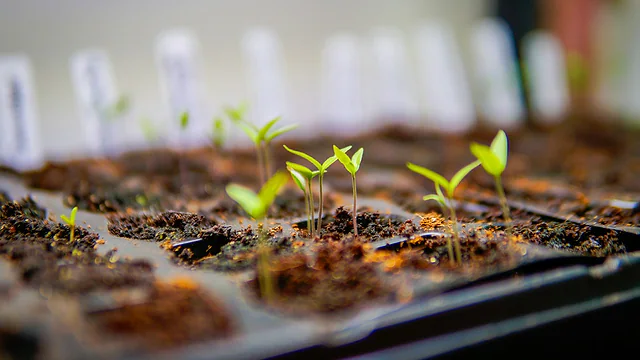
A well-managed nursery gives you seedlings that are sturdy, uniform, disease-free and ready to grow as soon as they reach the main field.
Step 1: Start with good seed and seed treatment
- Use quality seed of a suitable variety or hybrid from a reliable source.
- Treat seed with a recommended fungicide as per its label to protect against seed- and soil-borne diseases.
- Add nutritional seed treatment for a stronger start:
- Take Off ST® – a crop nitrogen assimilator, used at 1 ml per packet of seed. It supports faster emergence, increased vigour, better root development and stronger, healthier seedlings.
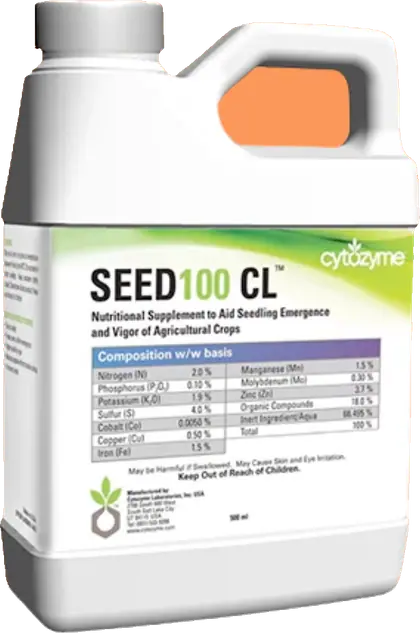
- Seed 100 CL™ – a nutritional supplement applied dry (do not use water). It can be used alongside all types of pesticides and fungicides, and supports earlier, more uniform emergence and healthier seedlings.
- Follow each product label for method and sequence. See our guide on how to treat seeds step by step.
Step 2: Prepare the nursery site
- Choose a well-drained, sunny spot close to a water source and protected from waterlogging.
- Prepare raised beds for vegetables and chilli; for paddy, prepare a well-puddled or raised nursery bed as per your system.
- Mix well-decomposed FYM or compost into the bed for good structure.
- For vegetables, pro-trays with a clean growing medium such as cocopeat give uniform, disease-free seedlings with less root damage at transplanting.
- Keep beds at a convenient width so you can work from the sides without stepping on them.
Step 3: Sow at the right density
- Avoid thick sowing. Crowded seedlings grow thin and weak and are more prone to damping-off.
- Sow in lines on beds where possible, for even spacing and easier weeding.
- Cover seeds lightly with fine soil or compost.
Step 4: Water, feed and protect
- Water lightly and regularly. Overwatering is a leading cause of damping-off in vegetable nurseries.
- Use shade net or mulch in hot weather and cover beds during heavy rain or cold spells.
- Keep the nursery weed-free, preferably by hand weeding.
- Feed with water-soluble fertilizer as recommended for your crop.
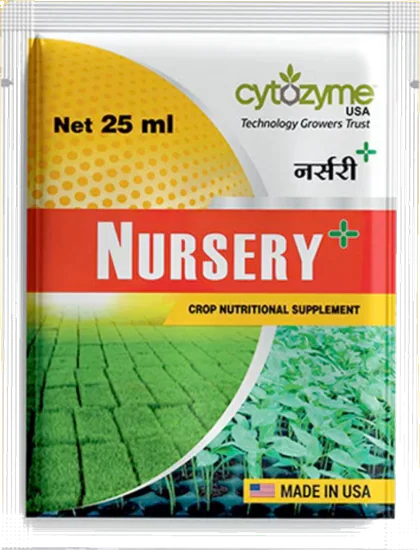
- Use Nursery+™ along with the water-soluble fertilizer at 2.5–5 ml per kg of water-soluble fertilizer.
What Nursery+ does: it is a nutritional supplement for a healthy, vibrant nursery crop. It supplies essential nutrients to maintain a healthy nursery, helps plants overcome abiotic stress such as high temperature and drought, protects nursery crops from herbicide shock, minimises transplant shock, and increases photosynthesis and antioxidants for a healthier crop in the main field.
- Watch for insects such as whiteflies, thrips and aphids in vegetable nurseries, and diseases like damping-off. Use insect-proof net where possible and follow local recommendations for crop protection.
Step 5: Avoid herbicide shock
Young seedlings are very sensitive to herbicides. Herbicide shock shows as yellowing, leaf burn, twisting or stunted growth.
- Do not use herbicides in the nursery unless specifically recommended for that crop and stage.
- If you use a herbicide, follow the label dose exactly and spray when there is no wind.
- Avoid spraying herbicides in neighbouring fields when it is windy, to prevent drift.
- Use separate, clean sprayers for herbicides and for nutrients or pesticides.
- Nursery+ helps protect nursery crops from herbicide shock as part of good nursery practice.
Step 6: Harden seedlings before transplanting
Hardening prepares seedlings for field conditions.
- In the last week or so before transplanting, gradually reduce watering.
- Remove shade nets slowly so seedlings get used to full sun.
- Water the nursery well a few hours before uprooting so roots come out with less damage.
Step 7: Transplant at the right age and in the right way
| Practice | Why it matters |
|---|---|
| Transplant at the recommended seedling age for your crop and variety | Overaged seedlings establish slowly; very young ones are fragile |
| Uproot gently with soil around roots; use pro-tray plugs whole | Less root damage, less shock |
| Transplant on the same day as uprooting | Prevents seedlings drying out |
| Transplant in the evening or on a cloudy day | Less water stress in the first hours |
| Irrigate the main field immediately after transplanting | Settles soil around the roots |
| Plant at the correct depth | Too deep or too shallow slows establishment |
| Gap-fill within a week with healthy seedlings kept aside | Keeps the plant stand uniform |
Healthy seedling checklist
Before transplanting, a good seedling should be:
- Of the recommended age for the crop
- Sturdy and short-jointed, not thin and tall
- Dark green, with no yellowing or leaf burn
- Free from insects and disease spots
- With a healthy, white, well-branched root system
- Hardened for several days before uprooting
Common mistakes to avoid
- Skipping seed treatment. The nursery stage is where seed- and soil-borne problems first strike.
- Thick sowing. It produces weak, lanky seedlings that suffer more shock.
- Overwatering. It invites damping-off and weak roots.
- Using herbicide carelessly near the nursery. Herbicide shock can set seedlings back badly.
- Transplanting overaged seedlings. They establish slowly and often yield less.
- No hardening. Soft seedlings moved straight into hot sun wilt and stall.
- Leaving uprooted seedlings in the sun. Exposed roots dry out quickly – keep them moist and shaded until planting.
- Delaying irrigation after transplanting. Water the field immediately.
Talk to a Verdesian agronomist
A strong nursery sets up the whole season. Contact a Verdesian agronomist for a nursery plan for your crop, or request trial reports to see how Nursery+ and Take Off ST perform.
Frequently asked questions
What is transplant shock?
Transplant shock is the setback seedlings suffer after being moved to the main field – wilting, yellowing and a pause in growth – mainly because roots are damaged or disturbed and the plant cannot take up water and nutrients normally for some days.
What is the dose of Nursery+?
Nursery+ is used at 2.5–5 ml per kg of water-soluble fertilizer.
How does hardening help seedlings?
Hardening gradually exposes seedlings to field-like conditions, usually by reducing watering and increasing sun exposure in the last week or so before transplanting. Hardened seedlings tolerate the stress of transplanting better.
Can nursery seedlings be affected by herbicide?
Yes. Herbicide applied in or near the nursery, or drift from nearby fields, can cause herbicide shock in young seedlings. Nursery+ helps protect nursery crops from herbicide shock.