What is fertigation?
Fertigation means applying fertilizer through the irrigation system – usually drip – so that water and nutrients reach the root zone together. For vegetables, fruit crops and other high-value horticulture, it is one of the most efficient ways to feed a crop.
Done well, fertigation lets you:
- Feed the crop in small doses matched to its stage of growth.
- Place nutrients exactly in the wetted root zone.
- Reduce wastage from runoff, volatilisation and deep leaching.
- Save labour compared to repeated manual application.
Done poorly, it can block drippers, waste fertilizer and cause uneven crop growth. This guide covers the practical basics.
Step 1: Check your drip system first
Fertigation only works if the drip system delivers water evenly.
- Check the filter (screen, disc or sand filter) and clean it regularly.
- Flush laterals and sub-mains at the start of the season and periodically after.
- Measure dripper discharge at the start, middle and end of a few laterals. Large differences mean uneven fertilizer delivery.
- Check that your venturi, fertilizer tank or injection pump works properly and you know its injection rate.
Step 2: Choose suitable water-soluble fertilizers
Use fertilizers that dissolve completely in water. Common water-soluble fertilizers (WSF) in Indian fertigation include urea, potassium nitrate, mono ammonium phosphate (MAP), mono potassium phosphate (MKP), potassium sulphate (SOP, soluble grade), calcium nitrate, magnesium sulphate and NPK grades such as 19:19:19.
Things to keep in mind:
- Ordinary granular DAP or SSP is not meant for drip injection.
- Calcium-containing fertilizers (such as calcium nitrate) should not be mixed in the same tank with phosphates or sulphates – they can form insoluble precipitates.
- Always dissolve fertilizer fully in a separate bucket or tank before injecting.
Step 3: Do a jar test before mixing
Before you mix two or more products in the fertigation tank for the first time, do a simple jar test.
- Take a clear glass or plastic jar and fill it with the same irrigation water you use on the farm.
- Add each product in the same ratio as you will use in the tank, one at a time, stirring after each.
- Let it stand for 15–30 minutes.
- Check for cloudiness, sediment, flakes, a layer on top or at the bottom, or heat.
If the mixture stays clear and uniform, it is generally safe to mix. If not, inject those products separately, on different days or in separate tanks. Water quality matters – hard or high-pH water can cause problems even with fertilizers that mix well in clean water.
Step 4: Plan a stage-wise schedule
Crops need different nutrients at different stages. A general pattern for vegetables and fruit crops:
| Crop stage | Main nutrient focus | Practical note |
|---|---|---|
| Establishment (after transplanting) | Phosphorus, moderate nitrogen | Support root growth; keep doses light |
| Vegetative growth | Nitrogen, phosphorus, potassium | Build canopy; increase doses gradually |
| Flowering and fruit set | Balanced N, higher potassium, calcium, boron | Avoid excess nitrogen |
| Fruit development | Potassium, calcium | Supports fruit size and quality |
| Maturity / colour change | Potassium | Reduce nitrogen |
Exact quantities depend on the crop, variety, soil test, expected yield and local recommendations. Split the total seasonal requirement into frequent small doses – for example, two or three times a week – rather than a few large ones.
Step 5: Run each fertigation cycle correctly
A simple three-part cycle works well:
- Wet the system – run plain water first so the lines are full and pressure is stable.
- Inject fertilizer – inject in the middle part of the irrigation time.
- Flush – run plain water at the end to clear fertilizer from lines and drippers.
This keeps nutrients in the active root zone and reduces dripper clogging.
Step 6: Avoid nitrate leaching
Nitrate is highly mobile in soil water. When too much water is applied, nitrate moves below the root zone and is lost – wasted money and a risk to groundwater.
- Apply nitrogen in small, frequent doses instead of large single doses.
- Avoid over-irrigation; match water to crop stage and weather.
- Do not inject fertilizer at the very end of a long irrigation, or at the very start when lines are still filling.
- On light, sandy soils, use shorter and more frequent irrigations.
Step 7: Boost efficiency with LYRA™
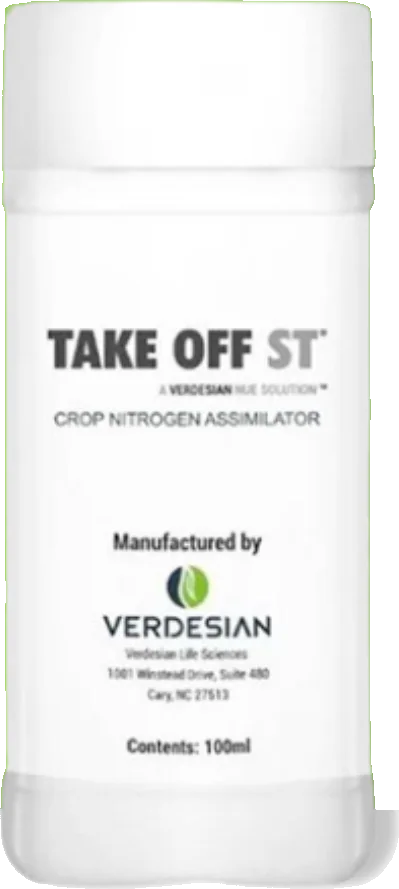
LYRA™ is a supplemental fertigation enhancer that uses advanced American NUE technology to boost the efficiency of water-soluble fertilizer. It combines Verdesian's Copolymer, Take-Off and Plus technologies and is formulated for fertigation in speciality and row crops.
How to use LYRA:
- Dose: 2.5–5 ml per kg of water-soluble fertilizer.
- Time of application: at fertigation, along with the water-soluble fertilizer.
- Instructions: apply in proportion to, and together with, the applied nitrogen.
Benefits:
- Improves nutrient availability and uptake.
- Improves nutrient availability by mitigating nitrate leaching.
- Optimises fruit set and fruit quality.
- Enhances abiotic stress tolerance.
For example, if you are injecting 10 kg of water-soluble fertilizer with nitrogen in a cycle, the LYRA quantity at 2.5–5 ml per kg works out to 25–50 ml for that cycle. Include it in your jar test the first time you mix it with a new fertilizer combination.
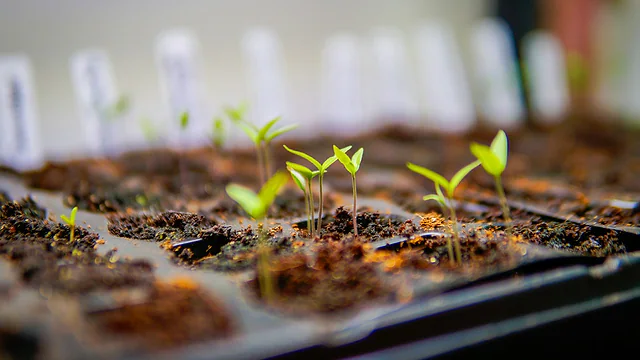
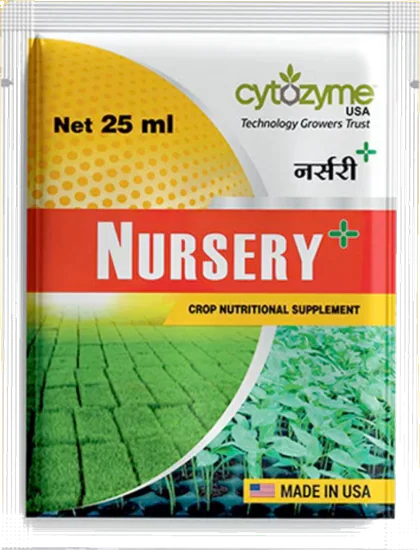
For nursery stages before transplanting, Nursery+™ is used at 2.5–5 ml per kg of water-soluble fertilizer to help keep seedlings healthy and reduce transplant shock.
Clogging: prevention checklist
- Use only fully water-soluble fertilizers
- Dissolve fertilizer in a separate container and pour through a cloth or filter
- Jar test every new combination with your own irrigation water
- Keep calcium fertilizers separate from phosphates and sulphates
- Clean filters regularly
- Flush laterals periodically
- Always run plain water after injection
- If water is hard or high in iron, consult an expert on acid treatment of lines
Common mistakes to avoid
- Injecting undissolved fertilizer. Undissolved particles block drippers quickly.
- Mixing calcium nitrate with phosphates or sulphates. This forms insoluble deposits in the tank and lines.
- Large, infrequent doses. They increase leaching and give uneven nutrition.
- Over-irrigating. Excess water pushes nitrate below the root zone.
- Skipping the flush. Fertilizer left in the lines dries and causes clogging.
- Same schedule all season. Nutrient needs change with crop stage – adjust the mix as the crop moves from growth to flowering to fruiting.
- Not checking dripper uniformity. Uneven drippers mean uneven fertilizer, even with a perfect schedule.
Talk to a Verdesian agronomist
Every crop, soil and water source needs its own fertigation plan. Contact a Verdesian agronomist to build a stage-wise schedule with LYRA, or request trial reports for your crop.
Frequently asked questions
What is the dose of LYRA in fertigation?
LYRA is used at 2.5–5 ml per kg of water-soluble fertilizer, applied at fertigation along with the water-soluble fertilizer and in proportion to the applied nitrogen.
How do I check if two fertilizers can be mixed in the drip tank?
Do a jar test: mix the products in a clear jar of the same irrigation water in the same ratio you plan to use. If the mixture turns cloudy, forms sediment or a layer, do not mix them in the same tank.
How can I reduce nitrate leaching under drip?
Split nitrogen into small, frequent doses, avoid over-irrigation, and inject fertilizer in the middle part of the irrigation cycle. LYRA also helps improve nutrient availability by mitigating nitrate leaching.
Should I run plain water after fertigation?
Yes. Running clean water for some time after injection flushes fertilizer out of the lines and drippers and helps prevent clogging.